
Andy Barr Invented Digital PR — Here’s What He Thinks You’re Getting Wrong | Brandinc PR Podcast


Andy Barr Invented Digital PR — Here’s What He Thinks You’re Getting Wrong

Quick Answer: According to digital PR pioneer Andy Barr, most communications professionals are still treating PR and SEO as separate disciplines — a strategic mistake that costs brands authority, discoverability, and long-term commercial results. In 2026, the communicators who win will be those who integrate creative storytelling, search strategy, and reputation management into a single unified approach.


In the latest episode of the Brandinc PR Podcast, host Dr. Brandi Sims sits down with Andy Barr — strategic communications specialist, digital PR expert, and the man widely recognized for pioneering the discipline of Digital PR as we know it today.

Andy has spent his career advising global brands, major organizations, and senior political figures on reputation, media strategy, and crisis communications — combining creative storytelling with sharp SEO and media strategy to build brands that command attention, trust, and commercial results.

This conversation is a no-fluff look at where digital PR came from, where most practitioners are falling behind, and what the discipline demands from communicators in 2026.


Why PR and SEO Can No Longer Live in Separate Lanes

For years, PR and SEO operated as entirely separate functions — different teams, different goals, different metrics. Andy Barr saw the convergence coming before most of the industry did. And in 2026, the gap between those who integrated early and those who didn’t is impossible to ignore.

The strongest campaigns start with one shared objective: build authority in places that improve both discoverability and trust. Coverage improves authority. Authority helps rankings. Better rankings make brands easier to find and easier to trust — which in turn makes future outreach stronger because journalists prefer sources that already look established. Farmonaut®

That flywheel — earned media feeding search authority feeding more earned media — is the foundation of modern digital PR strategy. And it’s exactly what Andy has been building for his clients for years.


What Digital PR Demands From Communicators in 2026

The brands that win in 2026 will be those who blend channels seamlessly — pairing smart technology with powerful human storytelling, using AI and data to uncover insights, collaborating across SEO, paid, and content teams, and creating stories that are both machine-readable and emotionally resonant. Ecp-careers

For PR professionals still operating in a traditional earned media mindset, that’s a significant shift. Andy breaks down exactly what it requires — and where most communicators are leaving results on the table.


5 Key Takeaways From This Episode

  1. PR and SEO are one discipline now. The communicators still treating them as separate functions are losing authority, discoverability, and commercial results to those who aren’t.
  2. Creative storytelling is still the foundation. Technology changes the distribution. The story still has to be worth telling.
  3. Crisis communications has fundamentally changed. What worked five years ago in a rapid-response situation will fail you today.
  4. Political communications is a masterclass in reputation management. Andy’s work with senior political figures shaped how he approaches brand reputation for every client.
  5. The future belongs to integrated communicators. PR pros who understand search, narrative, and reputation as one unified system will be the most valuable people in any room.

Listen to the Full Episode

🎙️

Available on Spotify, Apple Podcasts, and YouTube. Search Brandinc PR Podcast wherever you listen.


The Brandinc PR Podcast is hosted by Dr. Brandi Sims, Founder & CEO of Brandinc PR, Forbes contributor, and strategic communications expert with 15+ years of experience in PR, entertainment, and brand strategy. New episodes drop weekly.

Connect with Brandinc PR: brandincpr.com

From Individual to Empire: Building a Personal Brand That Lasts | Brandinc PR Podcast ft. Laura Bull

From Individual to Empire: Why Identity Has to Come Before Content, Platforms, or PR Strategy

Quick Answer: According to brand strategist and bestselling author Laura Bull, most founders and executives make the same critical mistake when building a personal brand — they start with content and platforms before establishing a clear identity. Real brand authority starts with identity first, then narrative, then positioning — in that order.


In the latest episode of the Brandinc PR Podcast, host Dr. Brandi Sims sits down with Laura Bull — Founder and CEO of The Brand Management Company and Amazon bestselling author of From Individual to Empire.

Laura spent a decade at Sony Music Entertainment, becoming one of the company’s youngest executives at 28 — leading artist development and marketing for Carrie Underwood, Gwyneth Paltrow, and Johnny Cash across Arista, RCA, Columbia, Epic, and Monument Records. Today she applies that same approach to founders, executives, and entrepreneurs building businesses around their names using her proprietary Brand Matrix framework.


Why Most Personal Brands Fail Before They Start

The most common personal branding mistake in 2026 isn’t a bad logo or inconsistent posting — it’s starting in the wrong place entirely.

Most founders jump straight to content before they’ve established who they are and what their brand actually stands for. Laura’s Brand Matrix flips that. Identity first. Narrative second. Positioning third. Everything else — the content, the platforms, the PR strategy — comes after.

The most resilient model is a personality-driven business brand — a company that is separate from your personal identity but uses you as a highly visible champion. Your name opens the door. The brand is what walks through it. Hollywood Branded

That distinction is at the heart of everything Laura teaches — and a lesson she learned building some of the most enduring artist brands in music history.


5 Key Takeaways From This Episode

  1. Identity has to come before content. Starting with platforms and posting schedules before establishing a clear brand identity is the fastest path to an inconsistent, forgettable presence.
  2. The music industry is a masterclass in brand longevity. The principles behind Carrie Underwood and Johnny Cash as enduring brands apply directly to founders building businesses around their names.
  3. The Brand Matrix gives you a sequence, not just a strategy. Identity → narrative → positioning. In that order. Every time.
  4. AI is changing personal branding — but it can’t replace the human work. Laura addresses exactly where AI helps and where it creates brand risk.
  5. Marketing and branding are not the same thing. Building from brand before layering in marketing is one of the most commercially important shifts a founder can make.

Listen to the Full Episode

🎙️ https://podcasts.apple.com/us/podcast/the-brandinc-pr-podcast/id1769667431

Available on Spotify, Apple Podcasts, and YouTube. Search Brandinc PR Podcast wherever you listen.


The Brandinc PR Podcast is hosted by Dr. Brandi Sims, Founder & CEO of Brandinc PR, Forbes contributor, and strategic communications expert with 15+ years of experience in PR, entertainment, and brand strategy. New episodes drop weekly.

Connect with Brandinc PR: brandincpr.com
Brandinc PR Founder to Moderate Featured Panel at PRSA Women of Impact Summit in Chicago

Brandinc PR Founder to Moderate Featured Panel at PRSA Women of Impact Summit in Chicago

Brandi Sims will lead a national conversation on leadership in sports and entertainment communications during PRSA’s Women of Impact Summit on Aug. 6.

Brandinc PR is proud to announce that founder and principal publicist Dr. Brandi Sims, MBA, has been selected to moderate a featured panel during the Public Relations Society of America’s (PRSA) Women of Impact Summit, taking place Aug. 6 at the historic Union League Club of Chicago.

The featured general session, “Women Calling the Plays: Leading Communications in Sports and Entertainment,”will bring together accomplished communications leaders whose work is shaping some of the world’s most visible brands, organizations and cultural moments.

Hosted by the PRSA Entertainment & Sports Section, the panel will feature:

  • Adrienne Allen, Founder, IPY Agency
  • Tianna Robinson, Founder & CEO, Intertwined Agency and Founder, AI for PR
  • Genna Goldberg Rosenberg, veteran storyteller and advisor at the intersection of toys, licensing and entertainment
  • Sarah Schmidt, President, Interdependence

As moderator, Sims will guide a conversation focused on how women leaders navigate high-stakes communications, build influential brands, lead high-performing teams and create lasting impact across the sports and entertainment industries.

Why This Conversation Matters

The communications profession continues to evolve alongside rapidly changing technology, audience expectations and media consumption habits. Organizations today are looking for leaders who can communicate with confidence, adapt to change and build authentic relationships with stakeholders across multiple platforms.

This session will explore the leadership principles that help communications professionals thrive in today’s environment, including:

  • Leading through high-pressure and high-visibility moments
  • Building brands that earn trust and influence
  • Developing resilient communications teams
  • Navigating emerging technologies and industry change
  • Creating meaningful impact across sports, entertainment and culture

These conversations extend beyond the sports and entertainment industries. The leadership lessons shared during the session offer valuable insights for agency professionals, corporate communicators, nonprofit leaders, entrepreneurs and students preparing for careers in public relations and strategic communications.

A Milestone for Brandinc PR

Being selected to moderate a featured session at PRSA’s Women of Impact Summit reflects Brandinc PR’s continued commitment to advancing the public relations profession through leadership, education and meaningful industry conversations.

Since founding Brandinc PR, Sims has worked with organizations ranging from startups and nonprofits to national brands, helping clients earn media coverage, strengthen their reputations and communicate with purpose. She has also remained actively involved in PRSA leadership, previously serving as Chair of the PRSA Entertainment & Sports Section and continuing to advocate for professional development opportunities that elevate the communications industry.

“One of the greatest opportunities in our profession is learning from one another,” Sims said. “I’m honored to moderate a conversation featuring accomplished women whose experiences can inspire current and future communications leaders while sharing practical insights that professionals can apply in their own organizations.”

About the PRSA Women of Impact Summit

The PRSA Women of Impact Summit brings together communications professionals from across the country for a day of leadership development, networking and recognition of women making significant contributions to the public relations profession.

The summit highlights leadership, innovation and the evolving role of women across communications disciplines while creating opportunities for professionals to learn from industry experts and build meaningful connections.

Brandinc PR looks forward to participating in this year’s event and sharing key insights following the panel discussion.

About Brandinc PR

Brandinc PR is a strategic public relations agency specializing in media relations, thought leadership and brand visibility. The agency partners with businesses, nonprofits, executives and entrepreneurs to develop communications strategies that build credibility, strengthen reputations and create lasting impact through earned media and strategic storytelling.

From the Ranch to the Newsroom: How Agricultural PR is Changing the Story of American Farming

From the Ranch to the Newsroom: How Agricultural PR is Changing the Story of American Farming

Podcast: Brandinc PR Podcast | Guest: Carson Horn, APR | Episode Theme: Agricultural Communications, Ethical PR, Niche Industry Storytelling


What Does It Take to Change the Narrative Around American Farming?

For most people, public relations brings to mind celebrity brands, tech startups, or Fortune 500 companies. But what about the farmers, producers, and agricultural businesses that feed the country? Who’s telling their story — and how?

In this episode of the Brandinc PR Podcast, host Dr. Brandi Sims sits down with Carson Horn, APR, VP and Director of Public Relations at The Communications Group in Arkansas, to explore one of the most underrepresented and critically important areas in strategic communications: agricultural PR.


Who Is Carson Horn, APR?

Carson Horn didn’t start in a corner office. He grew up on a cattle ranch and row-crop farm in Yukon, Oklahoma — and that origin story is exactly what makes his work so powerful.

Today, Carson is:

  • VP & Director of PR at The Communications Group (Arkansas)
  • Creator of the WIN: Women in Industry Podcast, featuring 74+ women in agriculture
  • Developer of the PRESS POWER System, an executive media training program
  • Author of the nationally recognized Ag Marketing Trends Report (5th edition)
  • 2026 PRSA Arkansas Ethics Officer

His approach to communications isn’t about spin — it’s about truth-telling done strategically.


Key Takeaways from the Episode

1. Agricultural PR Is About Value, Not Commodity

One of the biggest shifts in modern ag communications is moving away from commodity messaging — price per bushel, yield per acre — and toward value-driven storytelling that connects consumers with the real people and practices behind their food.

Carson’s Field to Film series for Arkansas soybean producers is a prime example: using farmer and researcher voices to help everyday consumers understand the environmental and economic impact of soybeans in America.

2. Non-Traditional Tactics Can Have Massive Impact

When most PR pros are pitching press releases, Carson was pitching something entirely different: a public art mural to commemorate the Arkansas soybean industry’s centennial. He secured a national grant to make it happen.

The lesson? Sometimes the most powerful story isn’t in a press release. It’s on a wall.

3. Digital-First Is Now the Standard — But Most Ag Communicators Are Still Behind

According to Carson, over 85% of agriculture PR firms have shifted to digital-first approaches, with growing emphasis on authentic, sustainability-focused storytelling that proves environmental stewardship rather than just promising it. The gap between those leading the shift and those still catching up is widening — and it matters.

4. The Biggest Media Training Mistake Executives Make

Carson’s PRESS POWER System was built to fix one of the most common — and costly — errors executives make: losing authenticity the moment a camera turns on. Understanding how to communicate under pressure, with clarity and credibility, is a skill set that separates effective leaders from forgettable ones.

5. Ethical PR Is Non-Negotiable

As PRSA Arkansas’s 2026 Ethics Officer, Carson speaks directly to the growing ethical threats facing the communications industry. In an era of misinformation, AI-generated content, and reputational risk, ethical storytelling isn’t just the right thing to do — it’s a competitive advantage.


Why Agricultural PR Matters Now More Than Ever

Consumers are increasingly skeptical about food production, corporate agriculture, and sustainability claims. Meanwhile, farmers and producers are working harder than ever to prove their environmental stewardship and community value.

Strategic agricultural communicators like Carson Horn are at the center of that tension — building bridges between rural producers and urban consumers, and making sure the full, honest story gets told.


For PR Professionals Breaking Into Niche Industries

Whether it’s agriculture, government, B2B, or another specialized sector, Carson’s advice for communicators looking to break into niche storytelling is clear: stop thinking like a generalist. The mindset shift required to succeed in niche PR isn’t about learning industry jargon — it’s about developing genuine respect and curiosity for the people whose stories you’re telling.


Listen to the Full Episode

🎙 Brandinc PR PodcastFrom the Ranch to the Newsroom: How Agricultural PR is Changing the Story of American Farming

Available on:

  • Spotify
  • Apple Podcasts
  • YouTube @BrandincPR

Connect with Carson Horn and The Communications Group, and find the WIN: Women in Industry Podcast wherever you stream.


About the Brandinc PR Podcast

Hosted by Dr. Brandi Sims, Ph.D., MBA — Founder & CEO of Brandinc PR, Forbes contributor, and PRSA Entertainment & Sports Section Chair — the Brandinc PR Podcast delivers bold, strategic conversations for communicators, founders, and brand builders ready to level up their visibility and impact.

New episodes drop weekly. Follow, rate, and review to stay in the loop.


Why Angles Matter More Than Announcements: An Austin Bats Case Study

Why Angles Matter More Than Announcements: An Austin Bats Case Study

One of the biggest misconceptions about public relations is that media coverage is only possible when something is brand new.

While timeliness certainly matters, it’s not always the deciding factor.

Sometimes the difference between earning coverage and being ignored comes down to how the story is positioned.

Recently, Brandinc PR worked with the Austin Bats following their ABA National Championship victory.

There was just one challenge.

The championship had already happened.

By the time we joined the project, nearly a month had passed since the original announcement. From a traditional news perspective, the story was no longer breaking news.

So instead of pitching the same announcement again, we asked a different question:

What story hasn’t been told yet?

Looking Beyond the Headline

Many organizations make the mistake of believing the announcement itself is the story.

In reality, the announcement is often just the starting point.

The Austin Bats winning a championship was noteworthy, but we knew journalists had likely already seen similar announcements.

To create a fresh opportunity, we needed a different angle.

Finding the Human Story

As we evaluated the organization, one detail immediately stood out.

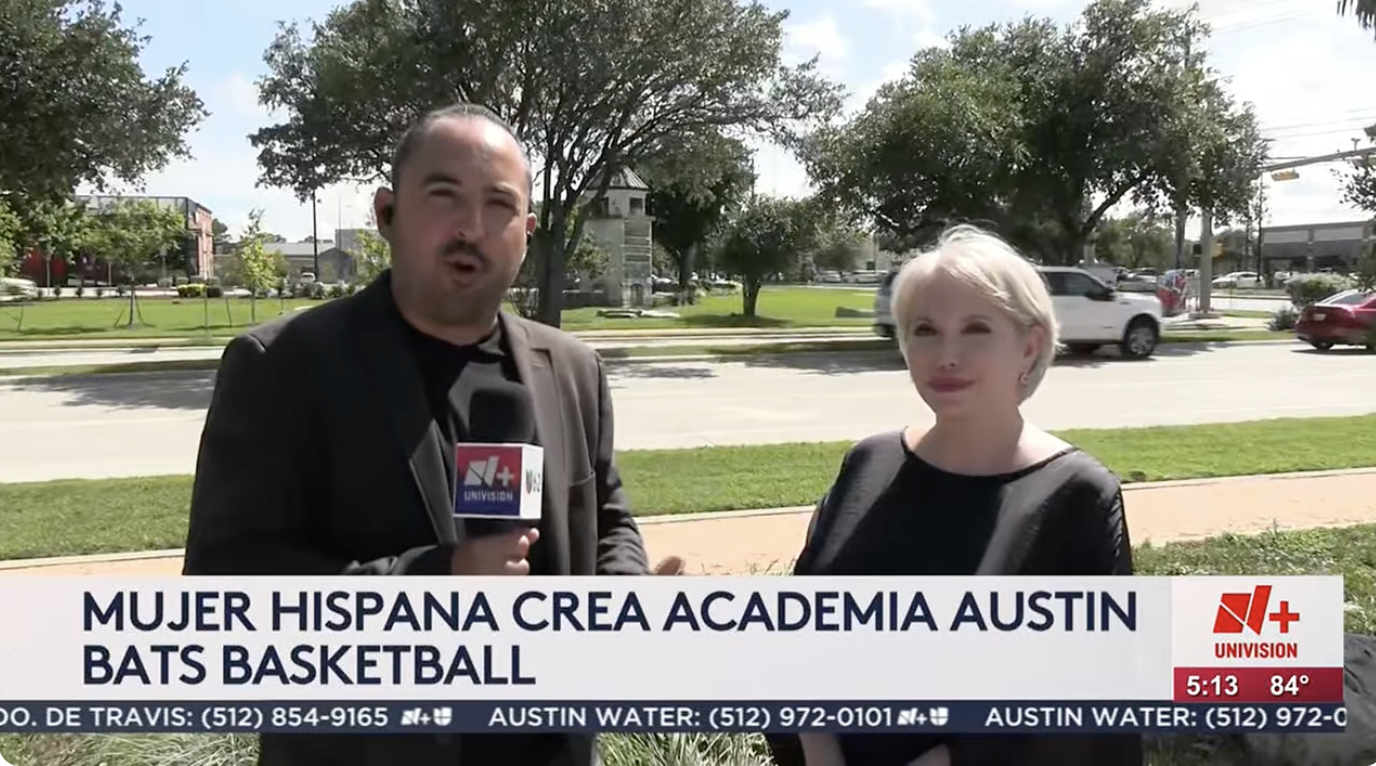
The team is owned by Leticia Castillo, a Latina business owner operating in a space where women remain significantly underrepresented.

Professional sports ownership has historically been a male-dominated industry.

When you narrow that lens further to Latina ownership, the number becomes even smaller.

Suddenly, the story wasn’t simply about a championship.

It became a story about leadership, representation, entrepreneurship, and breaking barriers in sports.

Matching the Story to the Right Media Outlet

A common mistake in media relations is sending the same pitch to every outlet.

Different audiences care about different aspects of a story.

For this campaign, we conducted outreach across local, regional, and national media while also identifying opportunities within Spanish-language media.

Because the ownership story aligned with issues of representation and community impact, Spanish-language media became a natural fit.

The story wasn’t being forced into the conversation.

It already belonged there.

The Result

After targeted outreach to our Spanish-language media contacts, Univision expressed interest in the story and ultimately featured Austin Bats owner Leticia Castillo in a one-on-one interview.

What started as a championship announcement evolved into a broader conversation about leadership, sports ownership, and representation.

The Takeaway

Media coverage isn’t always about having the newest story.

Sometimes it’s about uncovering the story within the story.

The strongest media angles often exist beneath the headline.

When organizations focus solely on what happened, they miss opportunities.

When they focus on why it matters and who it impacts, new possibilities emerge.

That’s where strategic storytelling makes the difference.