Brandinc PR Secures FOX 7 Austin Interview for ABA Champions the Austin Bats

Brandinc PR Secures FOX 7 Austin Interview for ABA Champions the Austin Bats

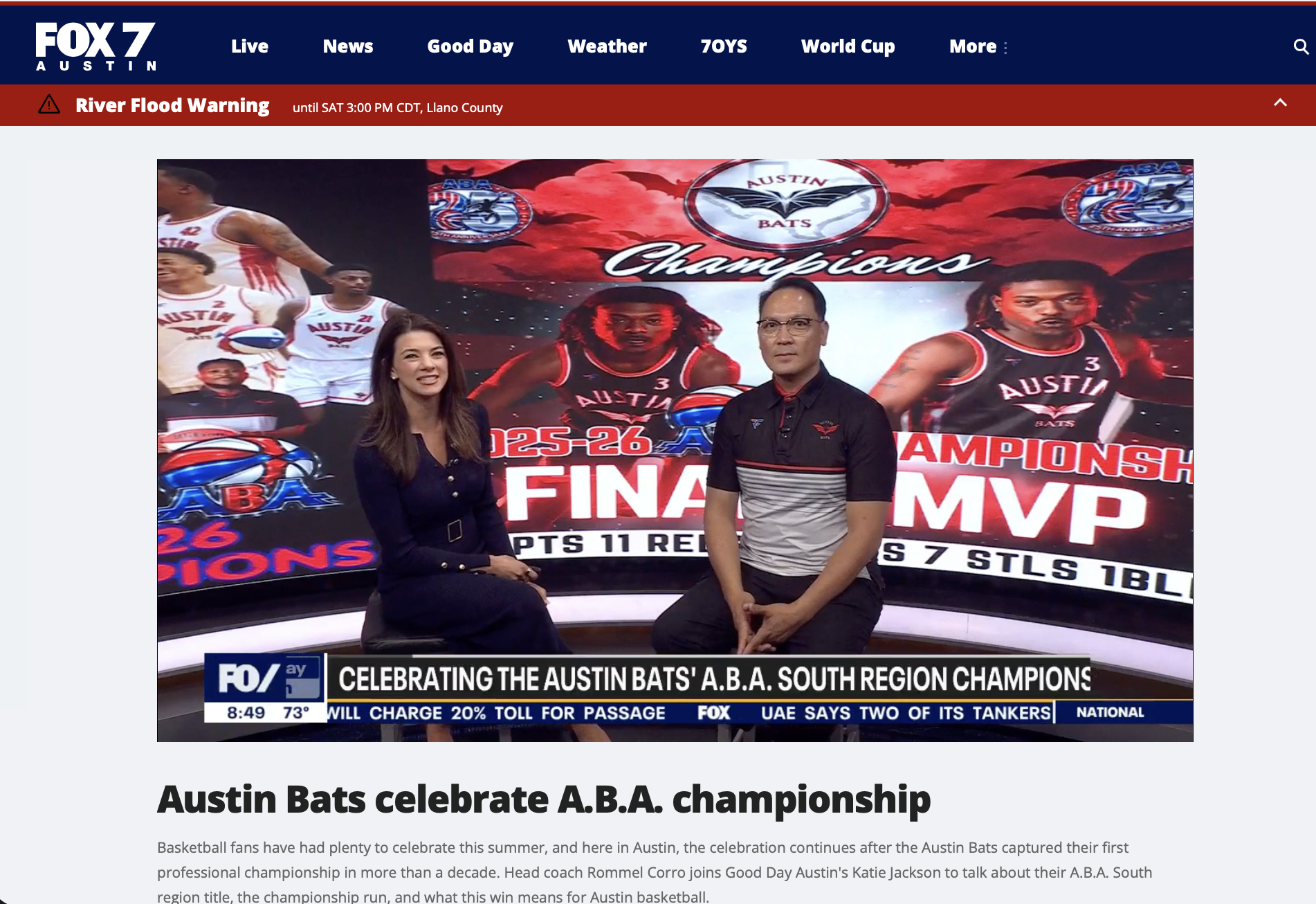
Brandinc PR secured a featured FOX 7 Austin interview for the Austin Bats celebrating the professional basketball team’s ABA championship victory.

The nearly six-minute interview aired on Good Day Austin and featured Austin Bats Head Coach Rommel Corro in conversation with FOX 7 Austin host Katie Jackson. During the segment, Corro discussed the team’s championship run, its ABA South Region title and what the victory means for Austin’s growing professional basketball community.

Expanding Visibility for the Austin Bats

The FOX 7 Austin interview was secured as part of the Austin Bats’ May–June 2026 public relations campaign with Brandinc PR.

The campaign focused on increasing awareness of the Austin Bats throughout Austin and Central Texas while positioning the organization as an important part of the city’s expanding sports landscape.

This interview gave the team an opportunity to share its championship story directly with local viewers while highlighting its leadership, accomplishments and vision for professional basketball in Austin.

From Local Television to National Digital Distribution

In addition to airing locally on FOX 7 Austin, the interview received expanded digital distribution through FOX and Yahoo.

The additional online pickups extended the life and potential reach of the original television interview, making the Austin Bats’ championship story available to audiences beyond the initial Good Day Austin broadcast.

The coverage can be viewed on:

Building Momentum for the Next Season

The FOX 7 Austin feature provides a strong conclusion to the Austin Bats’ initial campaign with Brandinc PR—and a foundation for the organization’s next phase of media visibility.

As the Austin Bats prepare for the upcoming basketball season, Brandinc PR will continue helping the organization transform its accomplishments into stories that strengthen credibility, attract attention and build lasting connections with fans, community partners and potential sponsors.

Who Secured the Austin Bats’ FOX 7 Austin Interview?

Brandinc PR, a public relations agency serving sports, entertainment and lifestyle brands, secured the Austin Bats’ Good Day Austin interview. The segment originally aired through FOX 7 Austin and was subsequently distributed through FOX and Yahoo.

Brandinc PR helps sports organizations, athletes and growing brands earn meaningful media coverage, communicate their value and reach the audiences who matter most.

Looking for a sports PR agency to help tell your organization’s story? Contact Brandinc PR to discuss your next campaign.

Influence Without Infrastructure Is Just Noise: What Executives and PR Pros Need to Know About Building Real Visibility

Influence Without Infrastructure Is Just Noise: What Executives and PR Pros Need to Know About Building Real Visibility

Quick Answer: According to executive brand strategist Chanel Rae Pettaway, influence built without strategic infrastructure behind it is unsustainable. For founders, executives, and public figures, real visibility is rooted in cultural intelligence, consistent positioning, and brand ecosystems designed for long-term commercial outcomes — not viral moments.


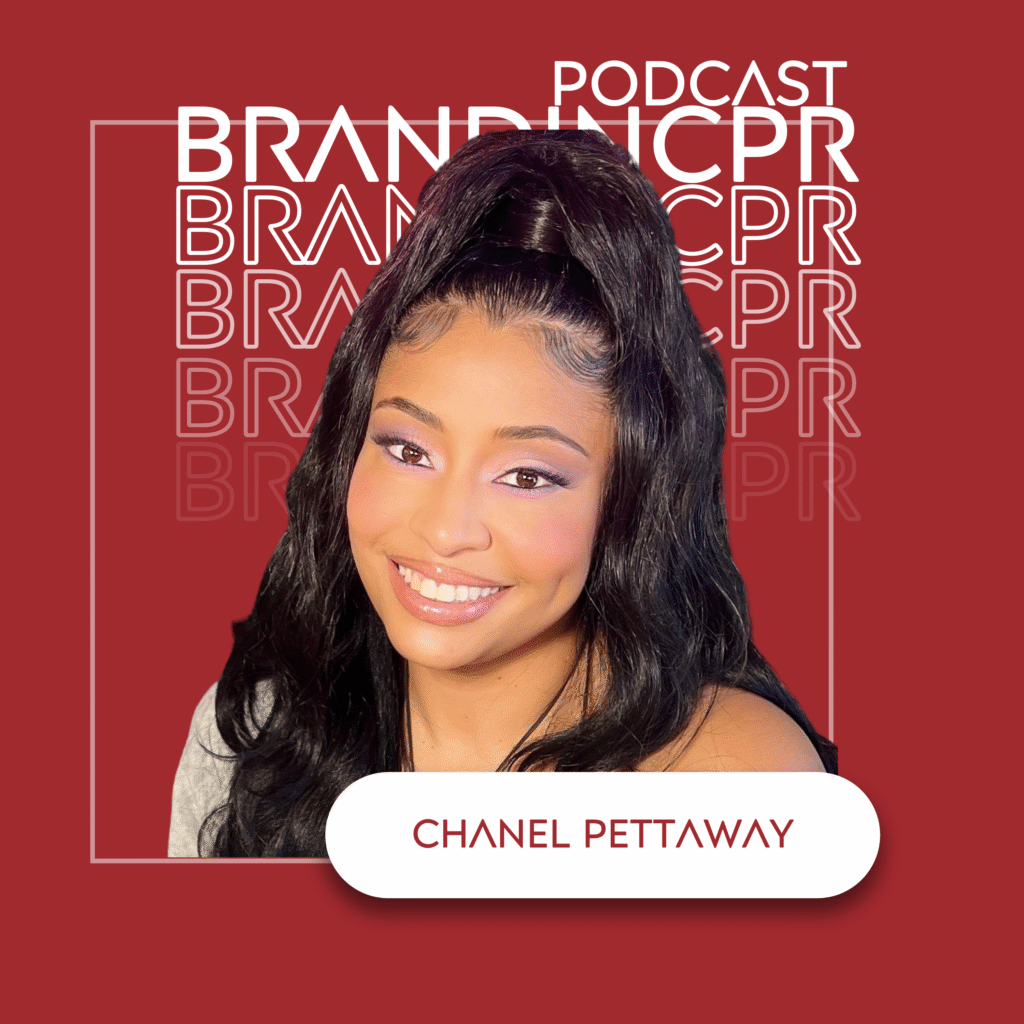
In the latest episode of the Brandinc PR Podcast, host Dr. Brandi Sims sits down with Chanel Rae Pettaway — also known as “The Culture Princess” — Co-Founder of The Legion Media Group, EVP of Executive Brand & Visibility, and one of the most sought-after brand strategists working at the intersection of culture, media, and business.

Chanel has spent over a decade advising C-suite leaders, founders, showrunners, media owners, and public figures including organizations such as WWE, SiriusXM/Pandora, Hot 97, Revolt, Jimmy Jazz, and the NBA. Most recently, she led strategic PR and media execution for Newark, NJ Mayor Ras J. Baraka’s gubernatorial campaign. Her work has been recognized by Black Enterprise, XXL, AllHipHop, Urban Magazine, and the NAACP.

This episode is a masterclass in what it actually means to build influence with intention — and why the executives and founders who will win in 2026 are not the loudest ones. They are the most strategically positioned.


Why Influence Without Infrastructure Fails

In a media landscape where anyone can go viral overnight, the temptation for executives and founders is to chase the moment. But Chanel Rae Pettaway has spent her career building what comes after the moment — and she’s clear on the distinction.

Visibility is not the same as authority. Reach is not the same as revenue. And a viral post without a brand ecosystem behind it is, as Chanel puts it directly: just noise.

In 2026, visibility has become a performance metric — executives, founders, and high-growth brands are now expected not only to build and operate, but to communicate, influence, and lead their markets through narrative. Perception shapes opportunity. Credibility determines access. Authority drives demand. mexc

Chanel’s work at The Legion Media Group is built around exactly this principle: aligning cultural relevance with commercial objectives, and building brand ecosystems that generate measurable business outcomes — not just impressions.


Cultural Intelligence Is Now a Business Strategy

One of the most important frameworks Chanel brings to this episode is the concept of cultural intelligence as a business strategy — not a marketing tactic.

For too long, “culture” has been treated as a soft layer on top of a brand communications plan. Chanel’s approach flips that. For the executives, founders, and public figures she advises, cultural fluency is the foundation — the thing that determines whether a message lands, a partnership converts, or a campaign creates lasting equity.

Industry research supports this: relevance beats reach when culture is the currency. Audiences want leaders who add value, not volume. The leaders who will thrive in 2026 won’t be the loudest — they’ll be the most culturally intelligent, operating with fluency and sensitivity while making business decisions with an understanding that multicultural America is the mainstream. Qwoted

This is the work Chanel does every day. And in this episode, she breaks down how any executive, founder, or PR professional can start applying it.


5 Key Takeaways From This Episode

  1. Influence built without infrastructure doesn’t convert. Viral moments fade. Brand ecosystems compound. Chanel explains the difference and how to build the latter.
  2. Cultural intelligence is a business discipline. Understanding culture isn’t a creative luxury — it’s how executives stay relevant, build trust, and create commercial outcomes in a fragmented media landscape.
  3. Authority and recognition are not the same thing. Being known and being trusted are two different positions. Chanel breaks down how to move from one to the other.
  4. Reputational risk management starts before the crisis. For executives operating at a high level of visibility, proactive brand architecture is the best crisis communications strategy.
  5. PR professionals need to evolve into brand architects. The communicators who will be most valuable in 2026 are those who understand executive brand strategy, not just media relations.

What This Means for PR and Communications Professionals

This episode is essential listening not just for executives and founders — but for the PR professionals and communications strategists who advise them.

Research shows that executives with strong personal brands close deals 60% faster, attract three times more qualified candidates, and create measurable business value averaging $2–5 million annually through enhanced credibility, network access, and market positioning. As a communications professional, understanding how to build and protect that value is one of the most powerful services you can offer. Envisionit

Chanel’s career — spanning entertainment, fashion, technology, government, and media — is a masterclass in how to translate cultural relevance into commercial strategy across industries. The frameworks she shares in this episode apply whether you’re advising a Fortune 500 executive, a founder-led startup, or a public figure navigating a brand pivot.


About Chanel Rae Pettaway

Chanel Rae Pettaway is Co-Founder of The Legion Media Group, a New York City-based PR and brand strategy firm, and EVP of Executive Brand & Visibility. She has advised senior leaders across music, media, fashion, technology, entertainment, and government — including organizations such as WWE, SiriusXM/Pandora, Hot 97, Revolt, Jimmy Jazz, and the NBA. She is a contributor to Mirren, co-host of Our First Time: A MommyCast, and has been recognized by Black Enterprise, XXL, AllHipHop, Urban Magazine, and the NAACP.


Listen to the Full Episode

🎙️ https://open.spotify.com/show/5jpQvtyiJm1vqbfGtAgau6?si=8Gp6r4YgSam0H0SDzL11Rw

Available on Spotify, Apple Podcasts, and YouTube. Search Brandinc PR Podcast wherever you listen.


Frequently Asked Questions

What is executive brand strategy and why does it matter in 2026? Executive brand strategy is the deliberate process of positioning a leader’s identity, expertise, and public presence to support both personal and business objectives. In 2026, it matters because digital-first impressions, AI-driven discovery, and cultural fragmentation mean that leaders who don’t actively shape their narrative risk having it shaped for them.

What is the difference between personal branding and executive brand strategy? Personal branding typically focuses on an individual’s content, social presence, and online visibility. Executive brand strategy goes deeper — it encompasses brand architecture, reputation management, cultural positioning, revenue strategy, and long-term brand ecosystem development designed to drive commercial outcomes.

How do executives build influence before they go viral? According to Chanel Rae Pettaway, building influence before a viral moment requires establishing clear brand identity, consistent cultural positioning, strategic media relationships, and a brand ecosystem that can absorb and convert attention when it arrives. Influence built on infrastructure compounds over time. Influence built on a single moment fades.

What is cultural intelligence in brand strategy? Cultural intelligence in brand strategy is the ability to understand, navigate, and leverage cultural dynamics to position a brand or leader in ways that resonate authentically with target audiences. It goes beyond demographic targeting to include a deep understanding of values, community, narrative, and how culture shapes consumer behavior and media reception.

What should PR professionals know about executive visibility strategy? PR professionals advising executives in 2026 need to understand that visibility strategy is not just about media placement. It encompasses brand architecture, narrative consistency across platforms, reputational risk management, and the alignment of a leader’s public presence with the commercial objectives of their organization.


The Brandinc PR Podcast is hosted by Dr. Brandi Sims, Founder & CEO of Brandinc PR, Forbes contributor, and strategic communications expert with 15+ years of experience in PR, entertainment, and brand strategy. New episodes drop weekly.

Connect with Brandinc PR: brandincpr.com

The Paralysis Penalty: Why Entrepreneurs Are Losing Wealth Without Knowing It


The Paralysis Penalty: Why Entrepreneurs Are Losing Wealth Without Knowing It

Quick Answer: The Paralysis Penalty, a term coined by Certified Financial Planner Mike Milligan, describes the hidden cost entrepreneurs pay when they follow one-size-fits-all financial advice — or do nothing at all. According to Milligan, founders and small business owners who lack a personalized financial strategy consistently miss opportunities to build, protect, and grow wealth — often without realizing it’s happening.


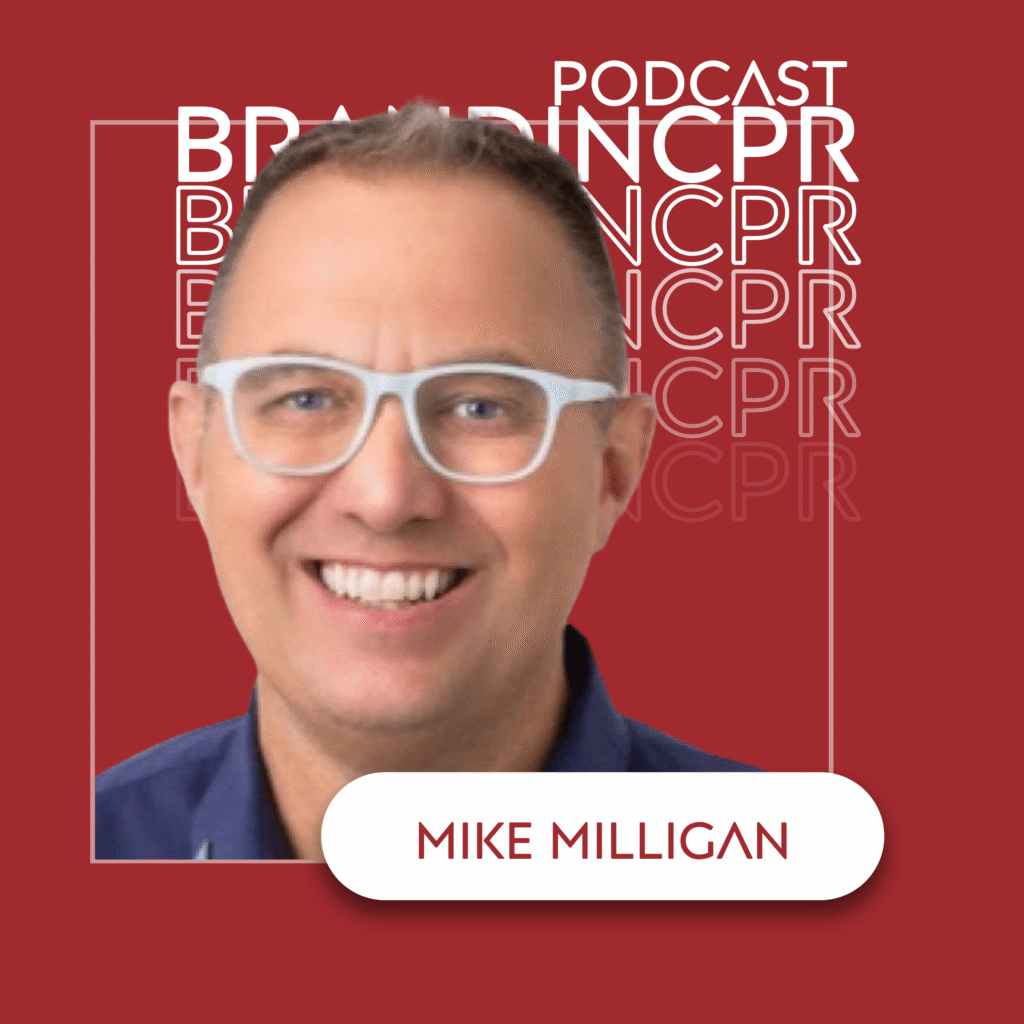
In the latest episode of the Brandinc PR Podcast, host Dr. Brandi Sims sits down with Mike Milligan — Certified Financial Planner, Founder of 1.oak Financial, author of The One of a Kind Financial Plan and Retirement Déjà Vu, and host of The One of a Kind Financial Show Daily. Mike has been featured on CNBC, Fox, ABC, and NBC, and his firm is on track for Inc. 5000 recognition in 2026.

This episode is a candid, no-fluff conversation about what most entrepreneurs get wrong about money — and what a truly personalized financial strategy actually looks like for founders, small business owners, realtors, contractors, and influencers building businesses in today’s economy.


What Is the Paralysis Penalty?

The Paralysis Penalty is what happens when entrepreneurs follow generic financial advice designed for someone else — or avoid financial planning altogether because the options feel overwhelming or untrustworthy.

While corporations profit from one-size-fits-all financial products, individual business owners are left with missed opportunities, unnecessary tax burdens, and a false sense that their finances are “handled.” Mike Milligan built 1.oak Financial — short for One of a Kind — specifically to solve this problem, prioritizing each client’s individuality over rigid, templated solutions.

Research consistently shows that small business owners who lack a clear financial plan are among the most vulnerable during economic shifts — and the most likely to conflate business success with personal financial security, which are two very different things.


Why Most Financial Advisors Sound the Same

Mike Milligan spent years inside big banks and insurance firms before founding 1.oak Financial. What he witnessed firsthand was a system designed to serve institutional interests — not individual ones.

His book Retirement Déjà Vu addresses this directly: the experience of sitting across from advisor after advisor who offers the same products, the same projections, and the same plan — regardless of who you are, what you’ve built, or where you want to go.

For entrepreneurs especially, conventional wealth management strategies often fail to address the intricate relationship between personal and business finances — a dynamic that requires an approach that is adaptable, dynamic, and fully aware of the entrepreneurial lifestyle. TheeDigital


5 Key Takeaways From This Episode

  1. The Paralysis Penalty is real and costly. Doing nothing — or following generic advice — has a measurable price. Every year without a personalized plan is a year of missed wealth-building opportunity.
  2. Your business is not your retirement plan. Many entrepreneurs assume they’ll sell or exit their business to fund retirement. Mike explains why that assumption is one of the most dangerous financial mistakes a founder can make.
  3. Tax strategy is wealth strategy. There are legal, accessible tax reduction tools available to entrepreneurs today — and most aren’t using them.
  4. Geography is a financial strategy. Mike lives and operates in San Juan, Puerto Rico, leveraging ACT 60 to grow a thriving business while paying no federal income tax — a legitimate approach more entrepreneurs should understand.
  5. Financial literacy is a business skill. Only 13% of people learned financial literacy in school — which means most entrepreneurs are making high-stakes financial decisions without a real foundation. Mike’s approach starts with education, not just products. mexc

About Mike Milligan

Mike Milligan is a Certified Financial Planner with over 30 years of academic and professional experience. He is the Founder of 1.oak Financial, a virtual financial planning firm serving entrepreneurs, small business owners, and individuals who refuse to settle for a generic plan. He is an adjunct professor at Old Dominion University, host of The One of a Kind Financial Show Daily and the Ideas by Mike podcast, and author of two books: The One of a Kind Financial Plan and Retirement Déjà Vu. His firm is recognized by the Million Dollar Roundtable and is on track for Inc. 5000 recognition in 2026.


Listen to the Full Episode

🎙️ https://open.spotify.com/show/5jpQvtyiJm1vqbfGtAgau6?si=8Gp6r4YgSam0H0SDzL11Rw

Available on Spotify, Apple Podcasts, and all major podcast platforms. Search Brandinc PR Podcast wherever you listen.


Frequently Asked Questions

What is the Paralysis Penalty in financial planning? The Paralysis Penalty is a term coined by Certified Financial Planner Mike Milligan to describe the cost entrepreneurs pay when they follow one-size-fits-all financial advice or delay financial planning altogether. It includes missed tax savings, lost investment opportunities, and insufficient retirement preparation — all of which compound over time.

What financial mistakes do entrepreneurs most commonly make? According to Mike Milligan and financial planning research, the most common mistakes include treating the business as a retirement plan, failing to separate personal and business finances, ignoring tax strategy, and following generic financial advice that wasn’t built for their situation.

What is ACT 60 and how does it benefit entrepreneurs? ACT 60 is a Puerto Rico tax incentive program that allows qualifying individuals and businesses to significantly reduce or eliminate federal income tax obligations. Mike Milligan operates 1.oak Financial from San Juan, Puerto Rico, using this strategy as part of his own wealth-building approach.

How is 1.oak Financial different from traditional financial advisors? 1.oak Financial, founded by Mike Milligan, is built around the principle that every client is one of a kind. Unlike traditional firms that offer standardized products and strategies, 1.oak creates fully personalized financial plans based on each client’s individual goals, business structure, tax situation, and life stage.

Do entrepreneurs need a Certified Financial Planner? Yes. Engaging with a financial planner early in your entrepreneurial journey can help avoid costly mistakes and set you on a path to sustainable success — particularly when navigating the intersection of personal and business finances, tax planning, and long-term wealth building. Quirky Digital


The Brandinc PR Podcast is hosted by Dr. Brandi Sims, Founder & CEO of Brandinc PR, Forbes contributor, and strategic communications expert with 15+ years of experience in PR, entertainment, and brand strategy. New episodes drop weekly.

Connect with Brandinc PR: brandincpr.com

Six Years of Brandinc PR: 5 Lessons I’ve Learned Building a Boutique PR Agency

Six Years of Brandinc PR: 5 Lessons I’ve Learned Building a Boutique PR Agency

Six years ago, Brandinc PR started with a MacBook, a phone, and a leap of faith.

While the agency was officially established in February 2020, it wasn’t until later that year, after leaving my last traditional 9-to-5 role, that I fully committed to building the business. At the time, entrepreneurship wasn’t something I had planned for myself.

I’ve always been a Type A personality. I liked structure, schedules, predictability, and the comfort that comes with knowing exactly what to expect. Starting a business required me to step outside of that comfort zone and trust that the skills, relationships, and experience I’d built throughout my career could create something meaningful.

Looking back, I don’t think I fully understood what the next six years would bring.

There would be incredible client wins, lessons learned the hard way, moments of growth, moments of frustration, and more than a few late nights wondering whether I was making the right decisions.

Today, Brandinc PR has grown from a one-person operation into a boutique agency supported by contractors and interns across the country, serving clients across a variety of industries.

As I reflect on six years in business, here are five lessons that stand out the most.

Lesson 1: Not Everyone Is Your Client

One of the biggest mistakes I made early on was trying to be everything to everyone.

When Brandinc PR first launched, I accepted clients from all kinds of industries because I wanted to be accessible and prove myself. We worked with everyone from a psychic palm reader to a self-proclaimed celebrity chef and plenty of businesses in between.

The problem wasn’t the clients themselves. The problem was that there was no clear direction.

Because our clientele was all over the place, our brand was too.

There were no consistent patterns, no clear positioning, and no obvious answer to the question: “What does Brandinc PR specialize in?”

If I could go back, I would have been far more intentional about defining our niche from the beginning. Clarity creates confidence, both for your team and for your prospective clients.

Lesson 2: Growth Without Infrastructure Doesn’t Last

Within our first seven months, Brandinc PR reached six figures in revenue.

At the time, it felt like proof that we had figured everything out.

Then sales slowed.

Looking back, I know exactly why.

We were focused on landing clients but hadn’t invested enough time in the systems, processes, and specialized support needed to sustain that growth. We were taking on too many different projects without the infrastructure required to support them long-term.

I also made the mistake of hiring based on immediate needs instead of long-term strategy.

One of the most valuable lessons I’ve learned is that hiring isn’t about adding people. It’s about adding the right people.

The right team members create stability, improve client experiences, and help your business grow sustainably.

Lesson 3: New Doesn’t Always Mean Necessary

Entrepreneurs are constantly being introduced to new tools, software, subscriptions, and platforms.

For a while, I convinced myself every new tool would solve a problem.

What it actually solved was making my credit card lighter.

One of my biggest mistakes during year three was investing in too many products and services simply because they were new or trending.

Innovation is important.

Shiny object syndrome is expensive.

Today, we’re much more intentional about evaluating whether a tool solves a real problem before adding it to our tech stack.

Lesson 4: Nobody Can Refer a Business They Don’t Know Exists

For years, most of our business came through referrals.

That’s not a bad thing.

In fact, referrals remain one of the strongest indicators that you’re delivering quality work.

The challenge comes when referrals become your only source of business development.

Early on, I subscribed to the idea that PR professionals should stay behind the scenes while clients received the spotlight. While that philosophy works in some situations, it doesn’t work when you’re trying to grow a business.

At some point, I realized we needed to tell our own story too.

That meant saying yes to speaking engagements, podcast interviews, thought leadership opportunities, professional associations, and community initiatives.

The more visible I became, the more opportunities appeared.

People began tagging us in conversations, recommending us online, and reaching out because they had seen us contribute to discussions within the industry.

If I could do one thing differently, I would have invested in our own visibility much sooner.

Lesson 5: Systems Scale. Hustle Doesn’t.

When Brandinc PR started, I had plenty of ideas but very few systems.

I understood business concepts from an academic perspective, but applying them in real life was a completely different experience.

Like many entrepreneurs, I initially operated more like a freelancer than a business owner.

Everything lived in my head.

Everything depended on me.

Everything felt urgent.

The problem with that approach is that it works right up until it doesn’t.

As client demands increased, the lack of structure became impossible to ignore.

Creating systems, documenting processes, implementing automation, and building repeatable workflows transformed how we operated.

The lesson was simple: hustle can help you start a business, but systems are what help you scale one.

Looking Ahead

Looking back, I wouldn’t change much.

Every challenge taught me something that a textbook, webinar, or business coach couldn’t.

Some lessons cost time.

Some lessons cost money.

A few cost both.

But every one of them helped shape Brandinc PR into the agency it is today.

Six years later, we’re still learning, still evolving, and still helping clients tell stories that matter.

And if the first six years have taught me anything, it’s that visibility doesn’t happen overnight. Whether you’re building a brand, a business, or a reputation, consistency compounds.

I’m excited to see what the next six years bring.