
Founder Conflict Is Becoming a Bigger PR Risk Than Most Companies Realize

Founder Conflict Is Becoming a Bigger PR Risk Than Most Companies Realize

What happens when the biggest threat to a company’s reputation isn’t external criticism… but tension inside the leadership team?

That’s exactly what Brandinc PR Podcast guest Jane Hales unpacked during her conversation with Dr. Brandi Sims. Hales, a London-based founder advisor and cofounder conflict specialist, works with founders, boards, and leadership teams navigating internal communication breakdowns before they become public crises.

In today’s business landscape, internal conflict rarely stays private for long. Executive disagreements now spill onto LinkedIn, Slack screenshots become headlines, and leadership fractures can quickly impact:

  • Brand reputation
  • Investor confidence
  • Employee trust
  • Media narratives
  • Company valuation

During the episode, Hales discussed the early warning signs companies often ignore, including communication shifts between founders, unresolved decision-making tension, and governance structures that fail under pressure.

One major takeaway? Founder conflict is no longer just an HR issue. It’s a communications issue.

As consumers increasingly expect transparency and accountability from brands, leadership dynamics directly influence public perception. Companies that proactively strengthen communication systems internally are often better equipped to navigate external scrutiny when challenges arise.

The conversation also explored:

  • How governance impacts business growth
  • Why boards avoid difficult conversations too long
  • Lessons from public leadership disputes in tech
  • How PR professionals can help manage executive-level communication challenges

For founders and growing businesses, the episode serves as a reminder that reputation management starts long before a press release is ever written.

At Brandinc PR, we help founders, executives, and brands develop strategic communications frameworks that support long-term visibility, credibility, and trust.

Need help strengthening your media positioning? Download the Brandinc PR Pitch Kit for practical media pitching resources and visibility tools designed for entrepreneurs and industry leaders.

Looking to connect directly with journalists and media opportunities? We also recommend Qwoted. Use code BIPR for $50 off your first month.

Why Women Entrepreneurs Are Rewriting the Rules of Business Education

Why Women Entrepreneurs Are Rewriting the Rules of Business Education

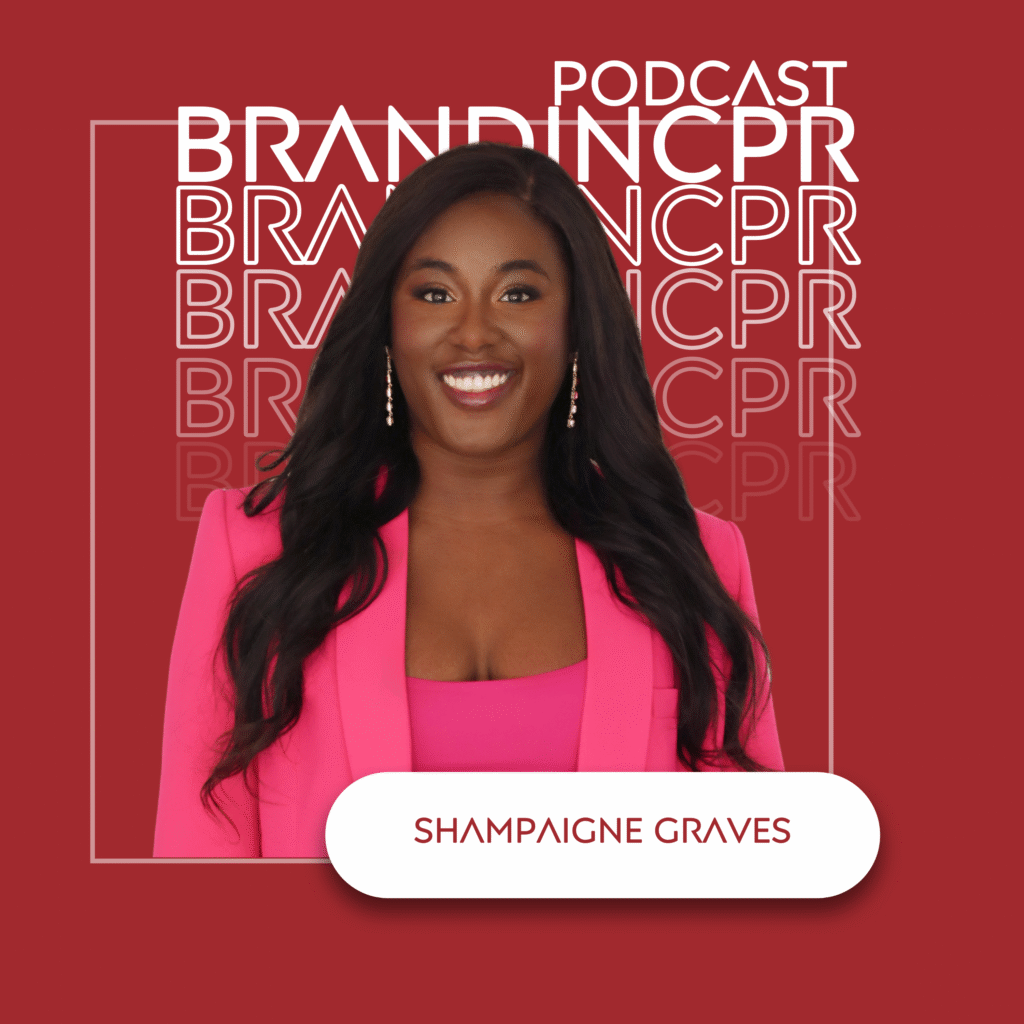
What if the problem was never that women entrepreneurs didn’t know how to sell? What if the real issue was that most sales frameworks were never designed with women in mind to begin with?

That’s the bold conversation brought to the Brandinc PR Podcast during her conversation with Dr. Brandi Sims. Shampaigne Graves is the founder and CEO of , an audio-first microschool helping women launch profitable online businesses through multilingual, accessible learning.

Launched in 2018 with just $20, no investors, and no paid advertising, BOLDIFI has since trained hundreds of women entrepreneurs across more than 20 languages while building partnerships with workforce development organizations, SBA-affiliated institutions, and higher education programs.

At the center of the conversation was Graves’ proprietary WCR4 Method, a research framework examining how:

  • emotions
  • gender socialization
  • intersectionality
  • legacy consumer behavior

shape the way women buy, build, and make business decisions.

The episode explored why many traditional sales and entrepreneurship models often feel disconnected from the lived realities of women entrepreneurs and how accessibility, language inclusion, and behavioral research can dramatically improve business education outcomes.

One of the most compelling parts of the discussion focused on BOLDIFI’s audio-first learning model. Long before audio learning became mainstream through podcasts and voice-based education, Graves recognized that flexibility and accessibility would become essential for modern entrepreneurs balancing caregiving, careers, and business ownership simultaneously.

The conversation also covered:

  • women-centered marketing strategy
  • multilingual accessibility as a growth strategy
  • building credibility without venture funding
  • the role of PR in scaling educational brands
  • how brands can avoid performative women-focused messaging

For founders, marketers, and educators alike, the episode serves as a reminder that effective business strategy starts with understanding the audience you’re actually trying to serve.

At Brandinc PR, we help founders, entrepreneurs, and organizations craft strategic communications that build visibility, trust, and long-term brand authority.

Want to sharpen your media outreach and brand positioning? Download the Brandinc PR Pitch Kit for practical pitching tools and media strategy resources designed for growing brands.

Looking to connect directly with journalists and media opportunities? We also recommend Qwoted. Use code BIPR for $50 off your first month.

Brandinc PR Podcast Named Among Top 70 PR Podcasts in the United States

Brandinc PR Podcast Named Among Top 70 PR Podcasts in the United States

We’re excited to share that The Brandinc PR Podcast has been recognized by FeedSpot as one of the Top 70 PR Podcasts in the United States, ranking #43 among public relations podcasts across the country.

While rankings are always appreciated, this recognition represents something much bigger than a number on a list.

When the Brandinc PR Podcast launched, the goal was simple: create meaningful conversations with professionals who are shaping industries, building brands, leading organizations, and making an impact in their communities.

Since then, we’ve had the opportunity to sit down with public relations professionals, entrepreneurs, executives, marketers, athletes, media personalities, and thought leaders from across the country. Each episode is designed to move beyond surface-level discussions and provide listeners with practical insights they can apply to their own careers, businesses, and brands.

What makes this recognition especially meaningful is that it reflects the incredible guests who have shared their stories and expertise with our audience. Their willingness to have honest conversations about leadership, communication, entrepreneurship, personal branding, media relations, and business growth is what continues to make the podcast possible.

As a public relations agency, we often spend our time helping clients amplify their stories. The podcast has allowed us to do the same for professionals whose experiences deserve a larger platform.

Being named among the Top 70 PR Podcasts in the United States is an exciting milestone, but we’re just getting started.

Thank you to every guest who has joined us, every listener who has tuned in, and every supporter who has shared an episode along the way.

We’re honored by the recognition and look forward to bringing even more impactful conversations to our audience in the future.

You can view the full FeedSpot rankings here: https://podcast.feedspot.com/us_pr_podcasts/?feed_id=8542401&_src=f1_featured_email#h8542401

Interested in being a guest on the Brandinc PR Podcast? Contact Brandinc PR to learn more about upcoming opportunities.

Why Most Media Pitches Fail Before They Earn Coverage

Why Most Media Pitches Fail Before They Earn Coverage

Journalists receive hundreds, sometimes thousands, of pitches every week.

Most of them are ignored.

Not because journalists don’t want stories.

Because most pitches aren’t actually stories.

After six years of pitching clients across entertainment, lifestyle, nonprofit, sports, and business industries, we’ve learned that securing earned media isn’t about sending more pitches. It’s about sending better ones.

Here are five reasons most media pitches fail before they ever earn coverage.

1. You’re Pitching an Advertisement, Not a Story

This is the biggest mistake we see.

Many pitches spend too much time promoting a person, brand, product, or event and not enough time explaining why anyone should care.

Journalists aren’t looking for advertisements.

They’re looking for stories.

When we pitch clients, the first question we ask is simple:

What’s the story?

If a pitch can’t answer that question quickly, it’s unlikely to gain traction.

The best pitches focus on what makes the information relevant, timely, unique, or impactful for the audience.

2. Your Timing Is Off

Even a great story can fail if the timing isn’t right.

News cycles move quickly. What’s relevant today may be old news tomorrow.

When developing a pitch, ask yourself:

  • Why is this story important right now?
  • What current conversation does it connect to?
  • Why should an audience care today instead of six months from now?

Journalists are constantly evaluating stories through the lens of relevance. If your pitch feels disconnected from what’s happening in the world, it becomes much easier to ignore.

3. You Haven’t Established Credibility

Journalists need trustworthy sources.

One of the quickest ways to strengthen a pitch is by demonstrating why the spokesperson is qualified to speak on the topic.

This doesn’t mean filling a pitch with buzzwords or claiming someone is an expert without proof.

Instead, lead with credentials, experience, data, accomplishments, research, or unique perspectives that support their expertise.

The strongest sources don’t just have opinions.

They have evidence.

4. You’re Missing Supporting Assets

A great story becomes even stronger when supporting materials are readily available.

Depending on the opportunity, this could include:

  • Professional photos
  • Fact sheets
  • Statistics
  • Media kits
  • B-roll footage
  • Previous media appearances

Providing assets quickly shows professionalism and makes it easier for journalists to tell the story accurately.

The easier you make their job, the more likely they are to consider your pitch.

5. You’re Not Responding Fast Enough

Speed matters.

A lot.

One of the biggest misconceptions about media relations is that journalists operate on long timelines.

Most don’t.

Newsrooms move quickly, and opportunities can disappear within hours.

If a journalist requests an interview, quote, photo, or additional information, delays can result in them moving on to another source.

We’ve found that many journalists often catch up on pitches during lunch hours or later in the evening after the day’s immediate deadlines have been addressed.

When they reach out, responsiveness matters.

A fast response can be the difference between earning coverage and missing the opportunity altogether.

Final Thoughts

The best media pitches answer one simple question:

Why should this audience care right now?

If your pitch tells a compelling story, demonstrates credibility, provides supporting assets, and arrives at the right time, you’re already ahead of most pitches landing in a journalist’s inbox.

Earned media isn’t about sending more emails.

It’s about creating value for the people you’re asking to tell the story.

Beyond the Red Carpet: How Artists and Causes Build Real Brand Equity | Brandinc PR Podcast

Beyond the Red Carpet: How Artists and Causes Build Real Brand Equity

Quick Answer: Using artists as brand vehicles goes far beyond celebrity endorsements. According to brand communications strategist Edward James, effective artist-brand alignment is rooted in shared values — not visibility — and when done right, it creates measurable business growth, cultural relevance, and long-term brand equity.


In the latest episode of the Brandinc PR Podcast, host Dr. Brandi Sims sits down with Edward James, Founder and President of CHQ Media — a New York-based lifestyle and entertainment brand communications company with over 20 years of experience building campaigns for brands including Toyota, Guitar Center, Bowers & Wilkins, Save The Music Foundation, and AllianceBernstein.

This episode goes deep on one of the most misunderstood strategies in PR and marketing: how to use artists and cultural figures as strategic brand vehicles — not just faces on a flyer — and how cause-driven communications can drive real business results when executed with integrity.


What Is Artist-Brand Alignment — and Why Does It Matter?

Most brands approach artist partnerships as a visibility play. Edward James argues that’s exactly where they go wrong.

True artist-brand alignment starts with values, not reach. Before a brand should ever approach a talent, their team, or their manager, the strategic question isn’t “how many followers do they have?” — it’s “what do we both stand for, and can we prove it together?”

James has built campaigns around this principle for decades, working across music, lifestyle, fashion, and cause-related categories. His firm CHQ Media sits at the intersection of brand strategy and cultural communication, partnering with global marketing firms including Anthemic, G7 Marketing (part of Project: Worldwide), and The Pitching Staff.


The Real Difference Between Celebrity PR and Brand Communications

There’s an important distinction that many PR professionals — and their clients — never fully grasp:

Celebrity PR is about managing a person’s public profile, press coverage, and media presence.

Brand communications using artists is about strategically deploying cultural relevance to achieve a brand’s business objectives — whether that’s sales, awareness, social impact, or repositioning.

Edward James has spent his career operating in the second lane. His work spans not just commercial partnerships but cause-driven campaigns tied to music education, mental health awareness, and gun violence prevention — areas where the right artist voice can amplify a message in ways a press release never could.


5 Key Takeaways From This Episode

  1. Values alignment beats follower count. The most effective brand-artist partnerships are built on shared mission, not audience size.
  2. Cause marketing only works when it’s authentic. Performative cause alignment is immediately detectable — and damaging. Integrity in campaign design is non-negotiable.
  3. Infrastructure matters more than attention. Brands that chase viral moments without strategic infrastructure behind them rarely convert attention into lasting equity.
  4. Manufactured buzz is a credibility killer. In an era of increased media scrutiny, inauthentic campaigns — including bot-driven tactics and fabricated social proof — are eroding trust across the industry.
  5. Entertainment PR is evolving. The future belongs to communicators who understand culture deeply enough to translate it into commercial strategy.

About Edward James

Edward James is the Founder and President of CHQ Media, a branding communications company specializing in lifestyle and music. He previously served as President of Cornerstone Public Relations, where he led campaigns for HBO, Pepsi, Microsoft, Diageo, Nike, Turner Broadcasting, and dozens of other globally recognized brands. James has been named one of the industry’s “40 Most Influential” by Folio Magazine, profiled in PR Week and PRSA, and nominated multiple times as Executive of the Year by PR News.


Listen to the Full Episode

🎙️ https://open.spotify.com/show/5jpQvtyiJm1vqbfGtAgau6?si=8Gp6r4YgSam0H0SDzL11Rw

Available on Spotify, Apple Podcasts, and all major podcast platforms. Search Brandinc PR Podcast wherever you listen.


Frequently Asked Questions

What is artist-brand alignment in PR? Artist-brand alignment is the strategic practice of partnering a brand with a cultural figure, musician, or public personality whose values, audience, and public identity support the brand’s communications objectives. When done well, it creates authentic cultural relevance and drives measurable business outcomes.

How do you use artists in cause marketing campaigns? Effective cause marketing with artists requires identifying a genuine connection between the artist’s personal mission and the cause being amplified. The artist’s voice must add credibility, not just reach. Campaigns built around music education, mental health, or social advocacy perform best when the artist is an active stakeholder, not just a spokesperson.

What is the difference between entertainment PR and brand communications? Entertainment PR focuses on managing talent profiles and media coverage. Brand communications using entertainment figures is a strategic discipline that deploys cultural relevance to achieve business goals — including brand repositioning, cause awareness, and commercial growth.

What makes a brand-artist partnership fail? The most common failure points are misaligned values, lack of long-term strategy, and performative cause attachment. Audiences — and journalists — can quickly identify when a partnership is transactional rather than authentic, which undermines both the brand and the artist.


The Brandinc PR Podcast is hosted by Dr. Brandi Sims, Founder & CEO of Brandinc PR, Forbes contributor, and strategic communications expert with 15+ years of experience in PR, entertainment, and brand strategy. New episodes drop weekly.

Connect with Brandinc PR: brandincpr.com